
Detective Byomkesh Bakshy Is a Masterpiece That Never Got Its Due
This is the first entry in FilmyFool Rewind — a series revisiting films I keep coming back to. Some are hidden gems. Some are well-known. All of them deserve a proper deep dive.
The Film That Stays With You
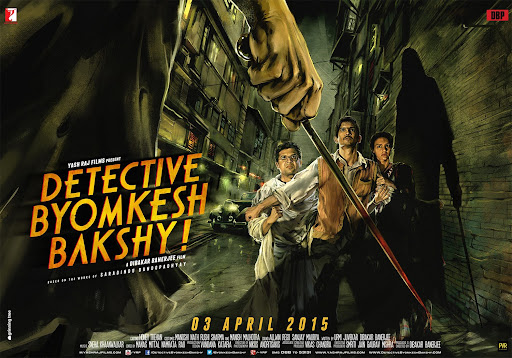
Some films age well. Detective Byomkesh Bakshy (2015) does something rarer — it gets better every time you watch it. Ten viewings in, the things that work still hit just as hard. That’s not something you can say about most Hindi films from any era, let alone one that barely made a dent at the box office on release.
This is FilmyFool Rewind — where I go back to films I love and actually dig into why they work. And there was only one place to start.
1940s Calcutta as a Character
Director Dibakar Banerjee sets the film in wartime Calcutta — early 1940s, World War II in full swing, Japan a real and present threat, and Bengal’s independence movement simmering underneath everything. That’s an enormous canvas for any filmmaker to handle. Most would retreat to controlled interiors.
Banerjee goes the other way. Chase sequences through marketplaces. Crowded streets. A city that breathes and sweats and hides things. The art direction and cinematography don’t just recreate the period — they make you feel the weight of it.
Additionally, the world-building extends into the frame itself. A newspaper page turns in the background as the focus shifts, and a different headline becomes visible — adding context without a word of dialogue. Bus posters, shop signs, background details: all of it carries meaning. This is a director who trusts his audience to pay attention.
The Music Does Heavy Lifting
Sneha Khanwalkar leads a soundtrack that earns every scene it plays over. The title sequence — Byomkesh on a tram, Calcutta rolling past, “Jaanam” coming in — is the kind of opening that gives you goosebumps before the story has even started. That combination of music, movement and city is just beautiful filmmaking.
Then there’s “Bach Ke Bakshy” — a rock and metal chase through Chinatown that shouldn’t work as well as it does, and somehow works perfectly. And the climactic sequence with “Byomkesh in Love” playing over a fight that’s been building the entire film. Banerjee knows exactly when to let the music carry the scene.
The Casting That Nobody Talks About Enough
The lead casting gets all the attention. Sushant Singh Rajput as Byomkesh is the weakest element here — and that’s not a criticism of him as an actor, it’s a structural problem the film doesn’t fully resolve. He’s not unconvincing. He’s just not the strongest thing about this film by a long distance.
However, everything around him is close to perfect. The British characters, the Japanese characters — nobody here looks like they were cast because they vaguely fit a demographic. The attention paid to supporting and peripheral casting is rare in Hindi cinema.
Neeraj Kabi as Dr. Anukul Guha is the standout. The camaraderie between Anukul Guha and Byomkesh is warm and specific in a way that feels genuinely earned. Their first meeting, every interaction that follows, the flashbacks — all of it works. And the final scene between them, with a music cue underneath that hits like a gut punch, is the kind of moment that makes this film worth watching alone.
The Sherlock and Tintin Connections
Banerjee wears his influences openly, and they’re good ones. Byomkesh and Ajit Banerjee map cleanly onto Holmes and Watson — the chemistry between the two actors makes that pairing feel natural rather than derivative. The antagonist fills the Moriarty role, and does it brilliantly.
The Tintin homage is less discussed but just as clear. A disguise sequence — where Byomkesh and Ajit change clothes and simply stand there — has a very specific visual quality that lifts directly from the comics. A chase through a marketplace. A leap onto a moving car. Whether Banerjee intended all of it or whether it emerged from genuine affection for the source material, it lands.
The One Flaw That Actually Matters
For all of that, the film has a genuine problem at its centre — and it’s worth being honest about it.
Byomkesh Bakshi is supposed to be a near-telepathic detective. The kind of mind that sees connections before anyone else. In this film, the early scenes that try to establish his deductive ability use the most simplistic of devices. He observes that people pay more attention to what they’re trying to hide. That’s it. That’s the setup for one of Indian fiction’s greatest detective minds.
As a result, when the film needs Byomkesh to go toe-to-toe with a villain who’s been five steps ahead of everyone the entire time, the gap feels too large. You don’t feel the intellectual match-up. You’re watching someone catch up, not someone who belongs in the same frame.
This is the one flaw that genuinely holds the film back from being what it could have been. Because the writing on everything else — the plotting, the way the layers intertwine, the climax reveal — is extraordinary. The deductive reasoning on Byomkesh’s character just needed more work.
A Film That Deserves a Second Look
Detective Byomkesh Bakshy didn’t get the audience it deserved in 2015. The sequel was planned, and then circumstances made it impossible. That loss is real — because this film sets up a world and a rivalry that had years of stories left in it.
What’s left is the film itself. And that film is brilliant. Go watch it. Go watch it again. Pay attention to the backgrounds. Listen to the music. Watch what Neeraj Kabi does in every scene he’s in.
You’ll understand why I keep coming back to it.