
Do You Believe in the Perfect Murder?
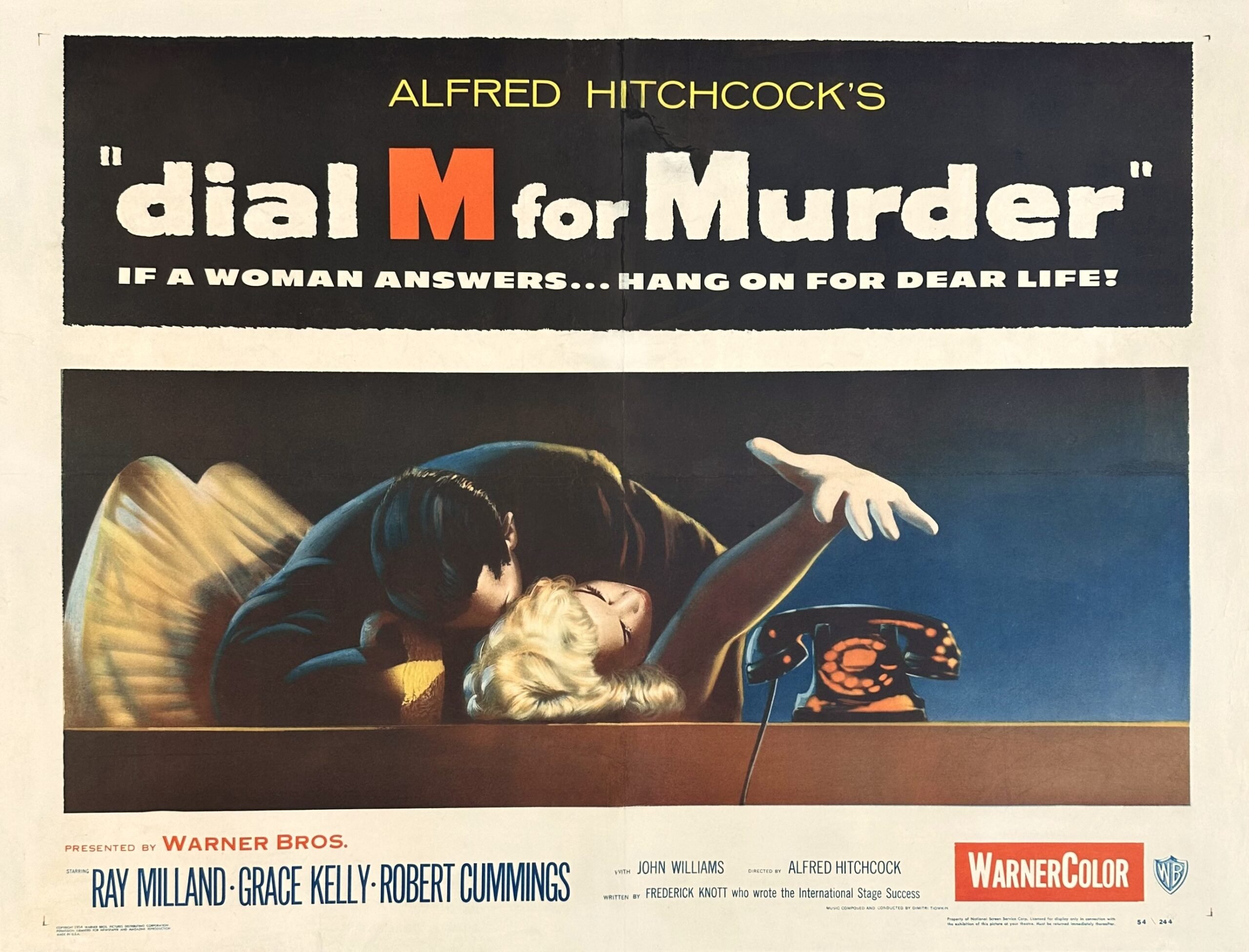
Dial M for Murder asks you that right at the start. And for the next 105 minutes, Alfred Hitchcock answers it without a single action sequence, without a chase, without a shocking twist. Just two people talking in a room. And you are completely glued.
This is FilmyFool Rewind Episode 2. And honestly, this film deserved to be the first.
I caught it again on a flight recently. Last time I had seen it was nearly 20 years ago. This second viewing was something else. Because this time I was watching it differently. Paying attention to how it was made, not just what was happening. And what I saw stopped me cold.
One Room. Fifteen Scenes. Zero Filler.
The first thing that stops you cold is the scene length. We’re talking 12, 13, sometimes 14 minutes per scene. The entire film is 105 minutes, and runs to roughly 15 to 18 scenes. That’s it.
Compare that to a modern thriller. Gone Girl. Knives Out. Any of the sharp, well-made ones. You’re looking at 60 to 70 scenes on average, with scene lengths of one and a half to three minutes. Fast cuts. Constant movement. The editing does the work of keeping you hooked.
Hitchcock does the opposite. He gives you long, dialogue-heavy scenes with minimal camera movement. And somehow, you don’t feel a single minute of it. That’s not accidental. That’s complete mastery of the form.
Watch the full review above and subscribe to FilmyFool on YouTube for more classic film breakdowns.
The Time Bomb Thesis: Hitchcock’s Secret Weapon
This is the principle the entire film runs on. Hitchcock described it himself.
Two people are having a conversation. A bomb goes off under the table. The audience gets maybe 15 seconds of shock. That is it.
Now change one thing. Show the audience the bomb before the conversation starts. Same two people. Same conversation. But now every single word they exchange is unbearable. You want to scream at the screen. That 15-second jolt becomes 15 minutes of pure dread.
That is the time bomb thesis. And Dial M for Murder uses it from the first scene to the last.
You know Tony’s plan before it unfolds. You know Swann is behind the curtain before Margot picks up the phone. So when the moment arrives, the tension is not in the surprise. It is in the waiting. You have been sitting with it the whole time. That is a completely different experience from what modern thrillers give you.
The Four Scenes That Make This Film
The first one that floored me is Tony laying out the murder plan to Swann. It is essentially a monologue. The other character barely says anything. Hitchcock just holds on Ray Milland’s face and lets it run. Very little camera movement. And the longer it goes, the more disturbing it gets. Because this man has thought of everything. A villain who is calm and completely prepared is far more frightening than one who is angry.
The second is the murder itself. What Hitchcock does here is just exceptional. Once the attack starts, you never see Margot’s face. Just her hands. The camera is low, shooting from under the table, catching that hand reaching out desperately for anything she can use to defend herself. No blood. No sharp cuts. No dramatic music. Just a hand. Just survival instinct. And it is one of the most visceral things you will see in cinema.
The third scene is Tony coming home after the plan has failed. He already knows it has gone wrong. And the whole time you are watching, you are almost convinced he is just trying to save himself and pin everything on the man who was killed. There is a small throwaway line in this scene. You barely notice it. But that line is a trap. And the film springs it on you much later with devastating effect. That is what great writing does.
The climax brings everyone back into that same room. The inspector works through it all out loud. And every small detail, every seemingly minor thing Tony did to cover his tracks, clicks into place one by one. No action. No chase. Just logic closing in. It is surgical. And it is incredibly satisfying.
The Apartment as a Character
About 90% of this film takes place in one apartment. One living room. And it never feels like a limitation. Hitchcock makes that space work for every scene. Where people stand, what they can see, what the camera can and cannot access. All of it is deliberate.
That room gets smaller and smaller as the film goes on. Not physically. But you feel it closing in around Tony Wendice. That is direction.
Hitchcock’s Genius Here Is Restraint
Here is the thing about this film. Hitchcock did not write it. Frederick Knott wrote the original play and adapted it for the screen. The story architecture was already close to perfect. Hitchcock’s genius was recognising that and not getting in the way.
Most directors would have opened this up. More locations. More movement. More visual variety. Hitchcock doubled down on the confinement. Trusted the writing. Trusted the performances. Used the camera only when it added something the words could not carry.
That restraint is why this film still holds up 70 years later.
H2: Watch This Film
Dial M for Murder is not just a great thriller. It is a masterclass in what cinema can do when a filmmaker is completely in control and knows exactly which elements to leave alone.
If you have never seen a Hitchcock film, start here. And if you have already seen this one, go back and watch it again. You will notice things you missed. That is what great filmmaking does. It gives you more every single time.
Alfred Hitchcock. There is no one like him. Not now, not ever.
This is FilmyFool Rewind. More where this came from.
If you’re looking for more essential cinema, check out the FilmyFool Rewind archive on filmyfool.com and if thrillers are your thing, the review of Obsession (2025) is worth your time too.